Some functions of this website do not support IE browser, please use other browsers such as Chrome or Edge.
PTFE (Polytetrafluoroethylene): Chemically inert, low-friction, high-purity engineering plastic
Chemical inertness: outstanding stability against acids, bases, solvents and halogenated media for corrosive environments.
Ultra-low friction & nonstick: very low coefficient of friction and low surface energy reduce sticking and wear.
High purity & insulation: low extractables with excellent dielectric behavior for semiconductor and E/E uses.
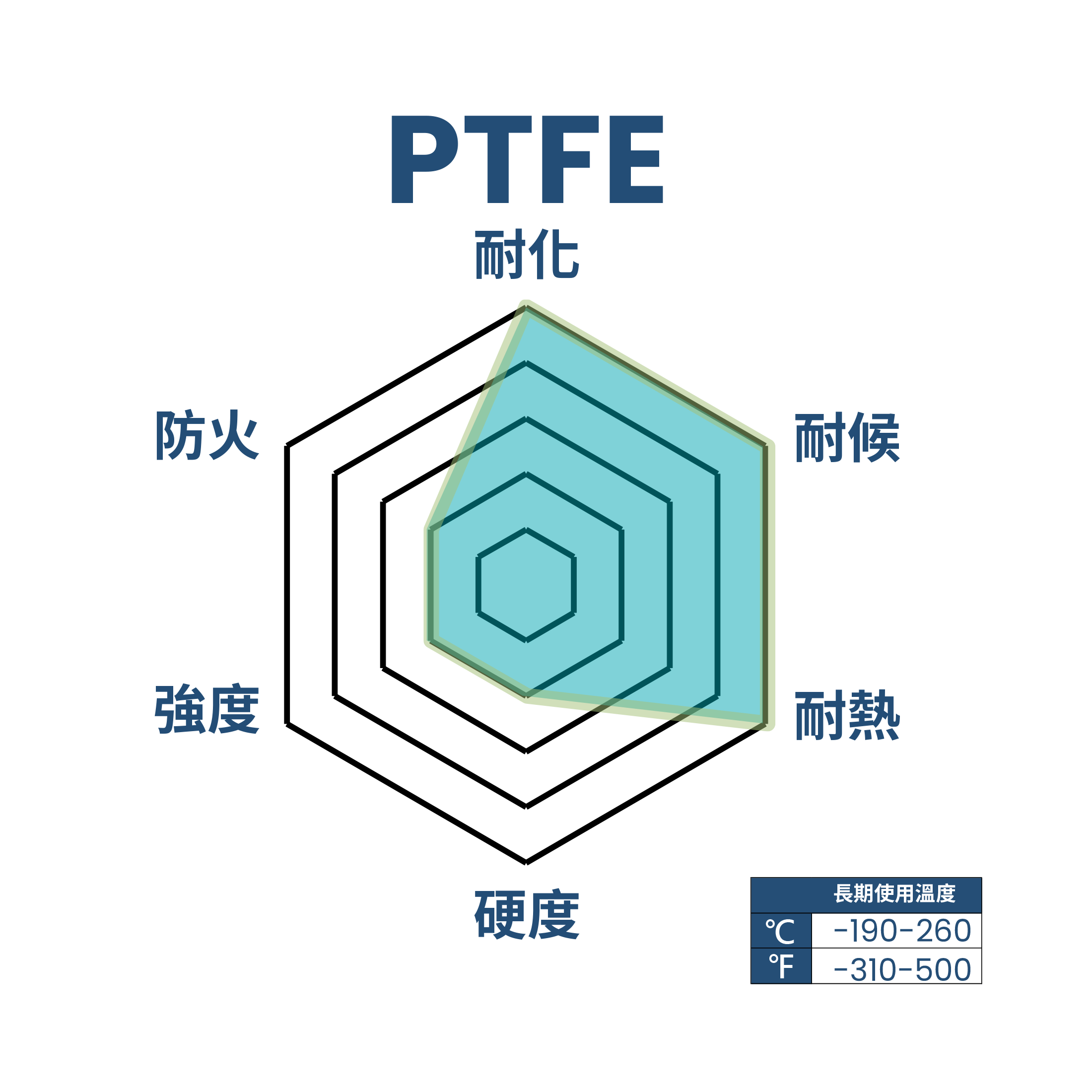
Wide temperature range: reliable performance from about -200 to +260 °C (unfilled grades have lower stiffness and can cold-flow).
~260 °C continuous Chemical inertness Ultra-low friction / nonstick High purity / low extractables Electrical insulation
Application Industries
- Semiconductor wet process (flow components, gaskets, spacers)
- Chemical & corrosion service (valves, flange liners, linings)
- Water treatment (chemical-resistant seals and washers)
- Electronics/Electrical (RF/high-frequency insulators, low-friction sliders)
Material Selection Highlights
- PTFE: inert, low friction / high purity → wet process, sealing & insulation; choose filled grades to improve stiffness/wear when needed.
- PEEK / PEEK+GF: high heat & chemical resistance → harsh-environment structures.
- PPS / PPS+GF: chemical resistance, flame retardant → E/E insulating parts.
- PVDF / PFA: chemical resistance & cleanliness → chemical piping and wet benches.
- PP / PP+GF: lightweight, economical → general structures & non-critical parts.
- RENY / PEI: high stiffness or high heat → load-bearing and high-temperature structures.
PTFE Property Radar