
Following the comprehensive overview of material specifications in the previous article, this part moves into the stage of practical validation.
Given the diverse and complex application environments of engineering plastics in power equipment, this section focuses on a representative extreme operating condition as a dedicated case study. Additional application scenarios will be explored and shared in future work.
Through experimental data, it provides insight into the actual performance behavior of materials under high-temperature oil immersion conditions.
Part 1: Transformation of Power Equipment Fasteners: Selection Logic from Metal to Engineering Plastics
Part 2: Engineering Plastics for Power Applications: From Material Specifications to Typical Uses
Part 3: Case Study: Reliability Evaluation of Engineering Plastics in Transformer Oil Environments
To simulate the oil-immersed environments commonly found in power equipment, a dedicated experiment was conducted.
Screws made of PPS GF40, PEEK, RENY, and PEI were immersed in transformer insulating oil at +120°C for 4 hours, simulating extreme overload conditions. (Ref. 6)
This report evaluates material performance under high-temperature oil exposure based on tensile strength and torque variation.
|
PPS GF40
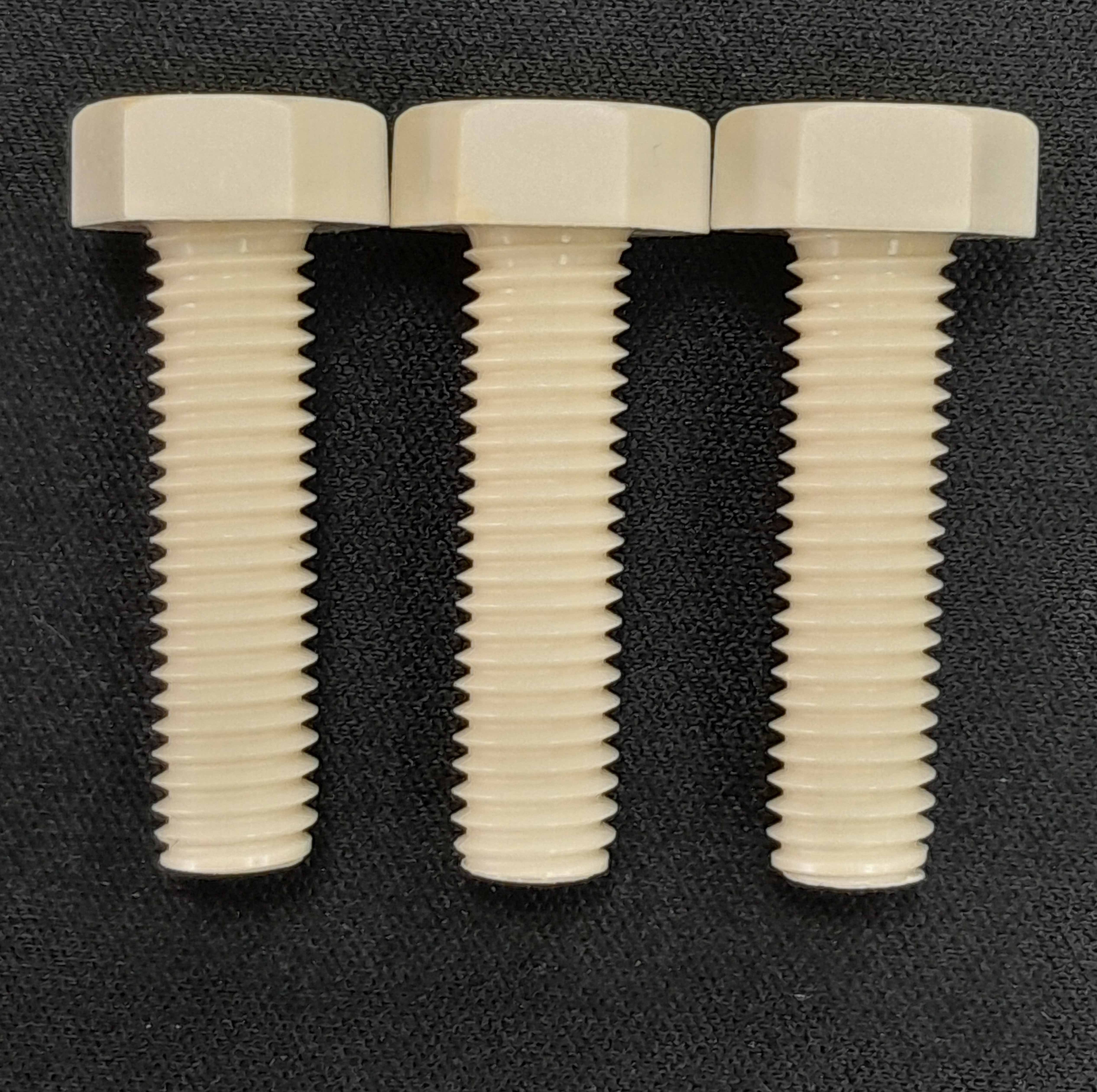 |
PEEK
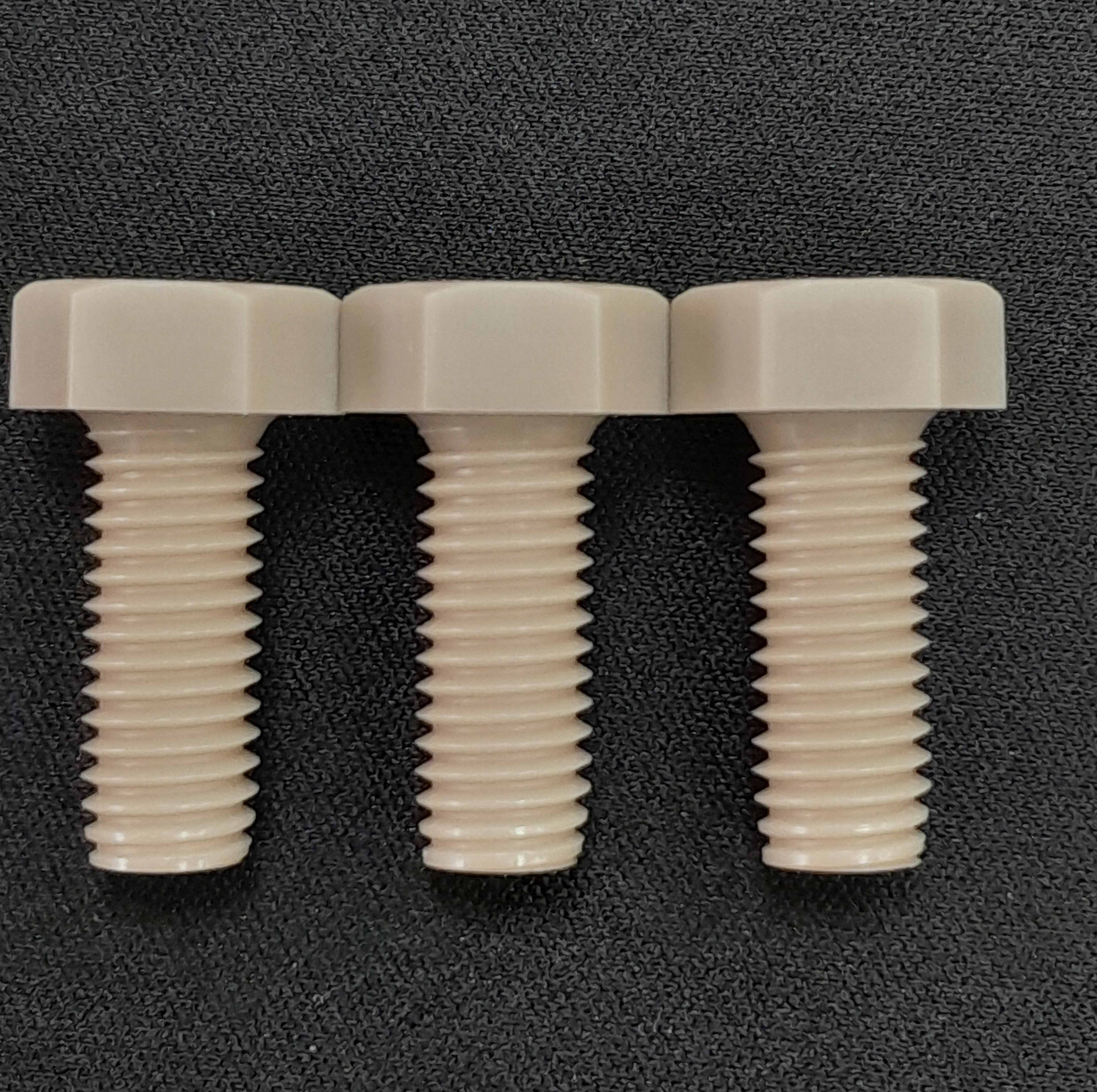 |
RENY
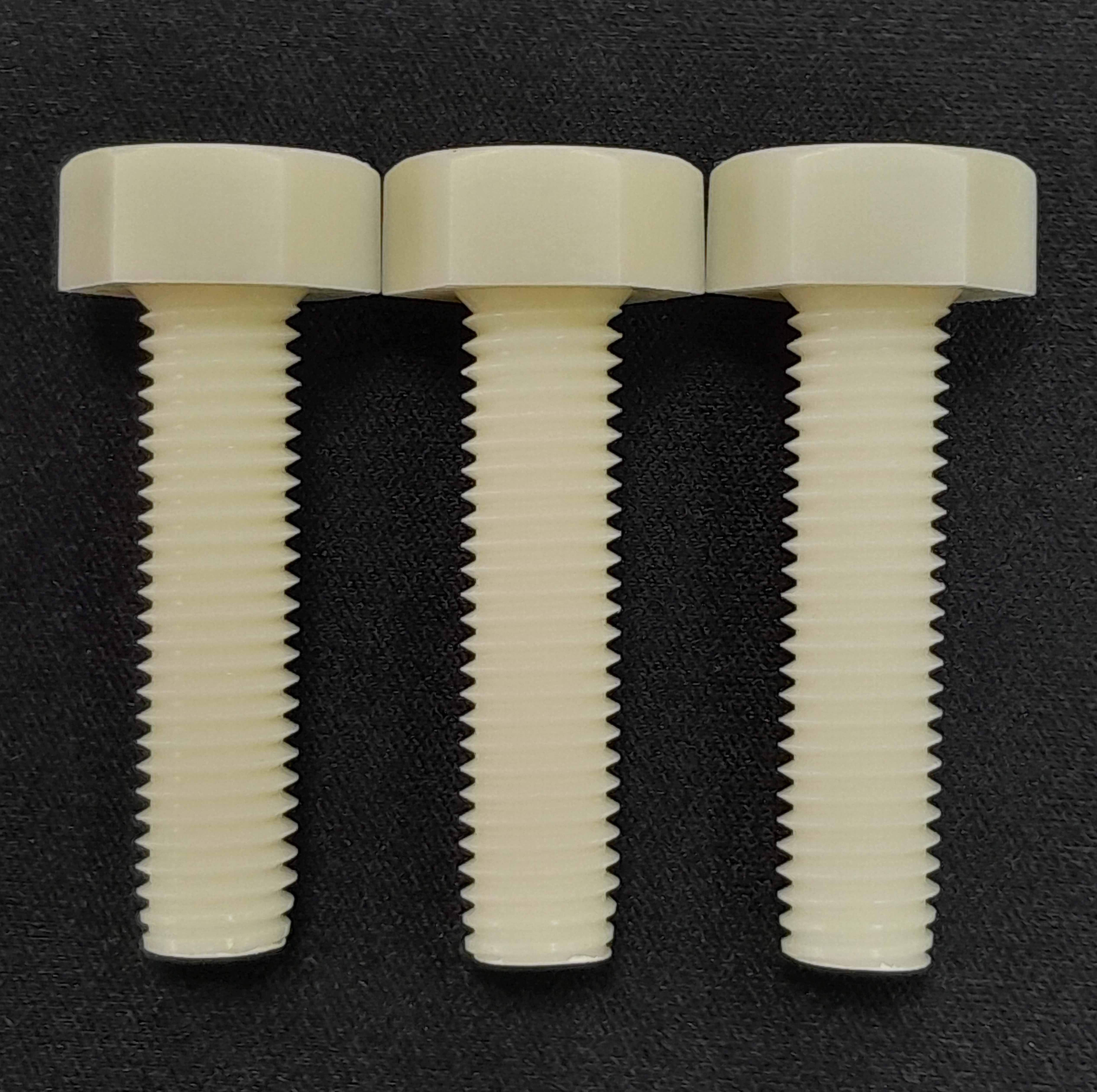 |
PEI
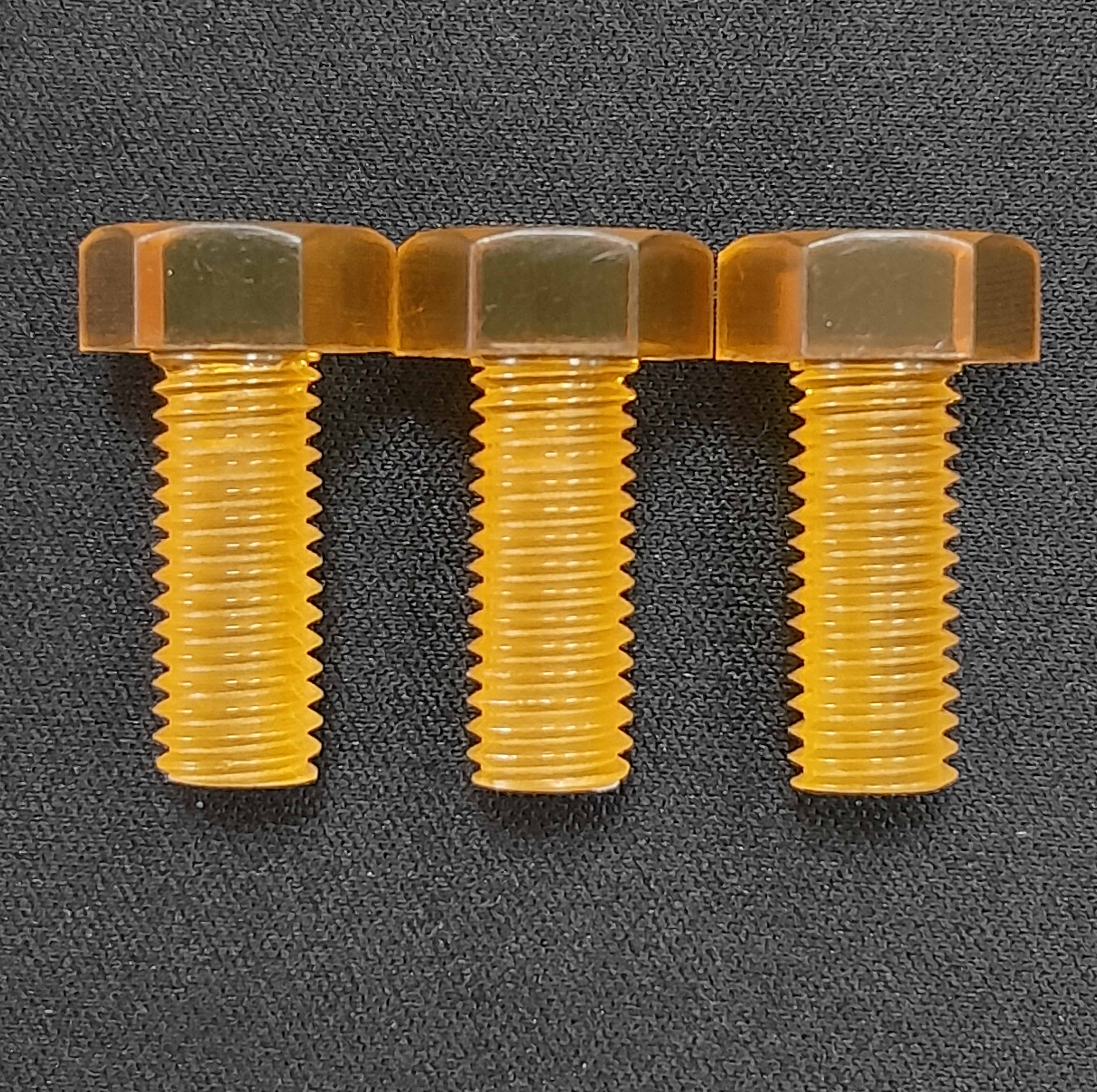 |
| Experiment Photo | Testing Equipment Photo | ||
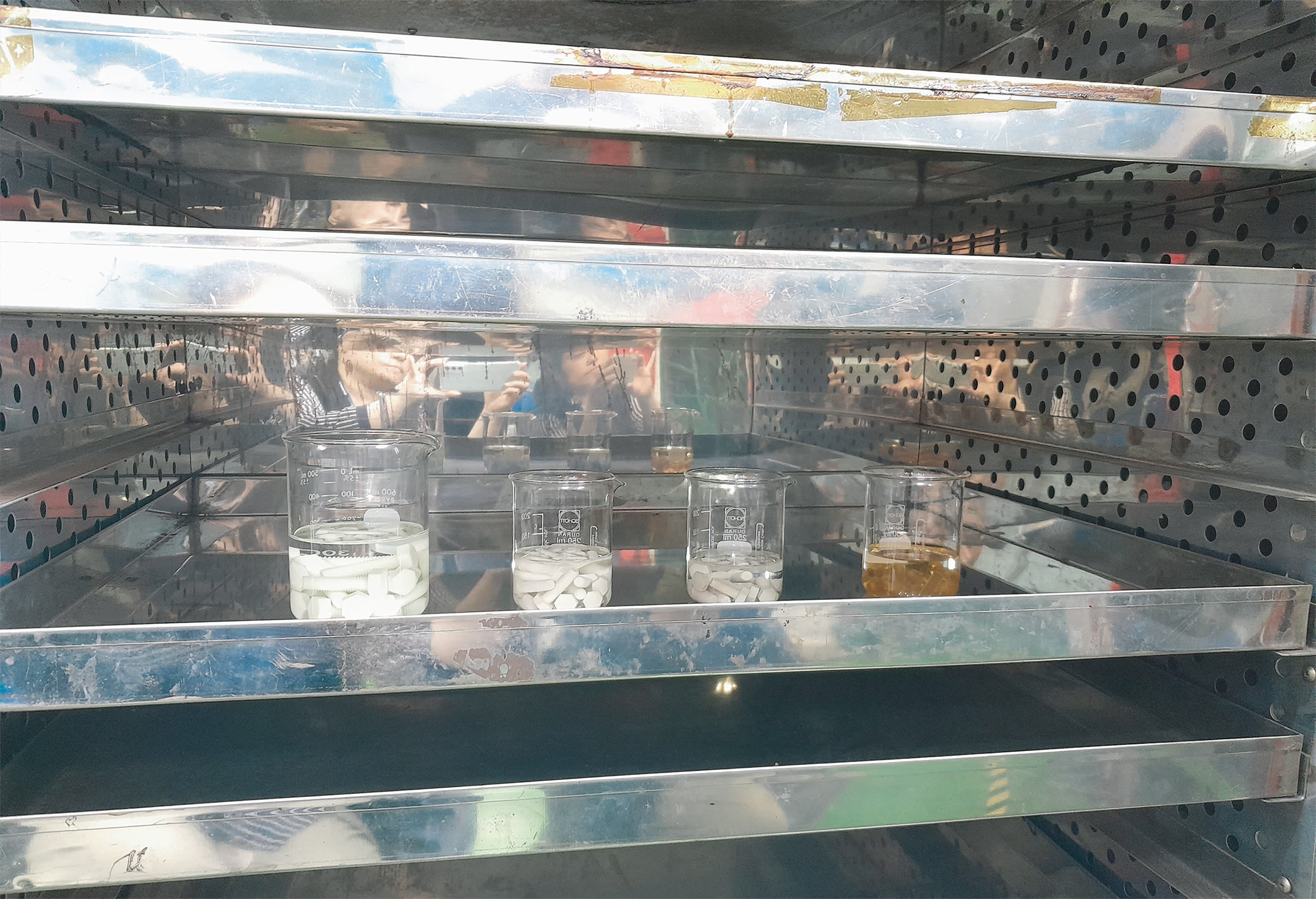
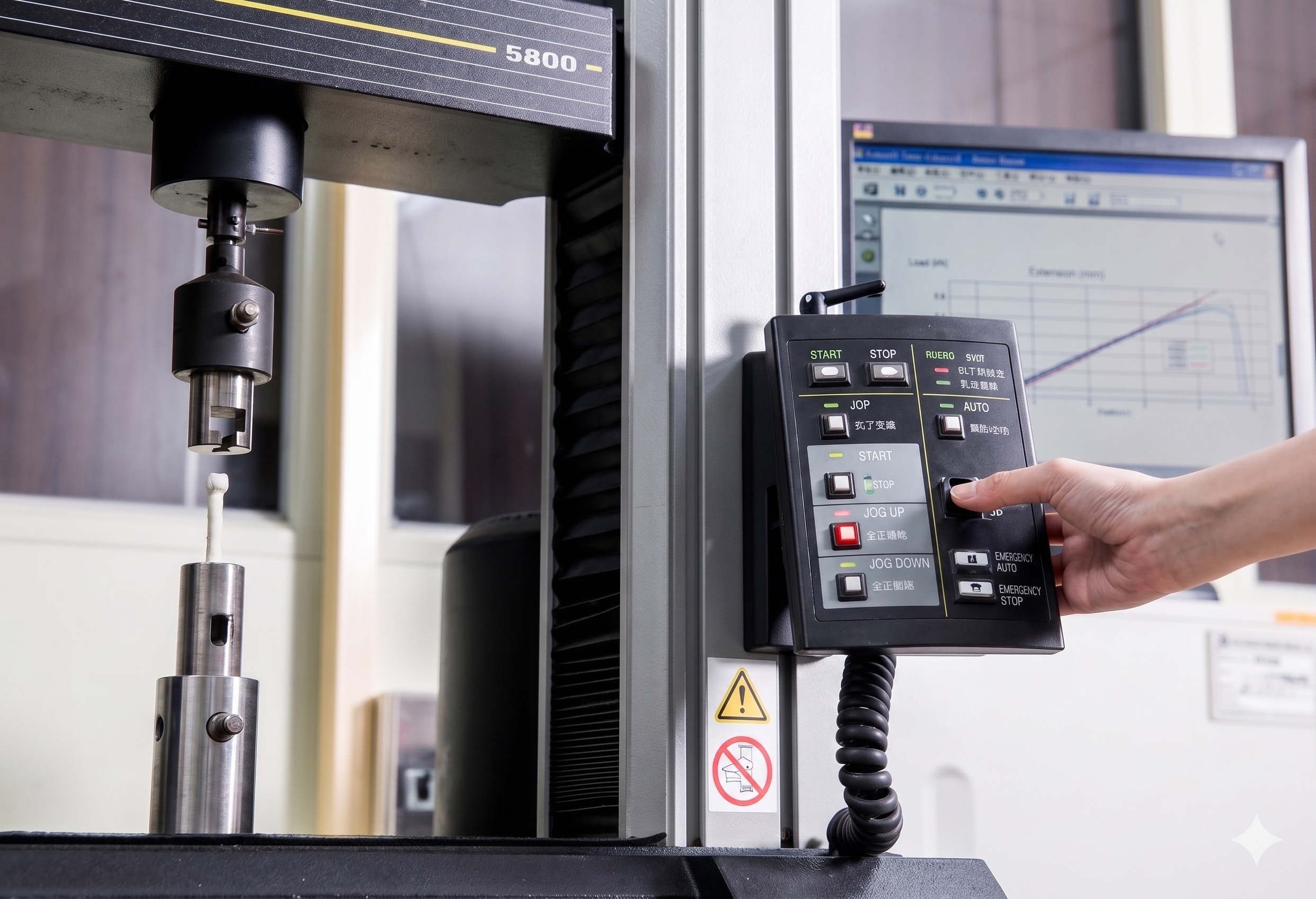
- 1. Physical Property Observations
The results show that all four materials exhibited no significant changes in appearance, geometry, or fastening performance before and after testing.
This demonstrates the excellent chemical inertness of high-quality engineering plastics. - 2. Changes in Tensile Strength
Tensile testing reflects the load-bearing capability of the material:
• PPS GF40:
Tensile strength decreased by 7.72%, which is within the expected range and reflects stress relaxation behavior of glass fiber–reinforced materials in hot oil.
• Other materials (PEEK, RENY, PEI):
Only minimal reductions were observed, indicating strong structural stability. - 3. Critical Changes in Torque Performance
Torque performance reflects resistance to torsion and friction behavior during fastening:
• PPS GF40 & PEI:
Torque values increased by approximately 7–8%, suggesting that microscopic surface changes after oil immersion may increase friction during tightening.
• PEEK & RENY:
Torque values decreased after testing.
• Warning – RENY:
Torque decreased significantly by 17.63%.
This indicates that while tensile strength remains stable, thread torsional resistance is substantially reduced under high-temperature oil immersion.
Engineers must compensate for this effect when designing structures requiring repeated fastening in oil environments.
Experimental Data Summary
| Material | Link Upon Lab | Tensile Strength | Torque |
|---|---|---|---|
| PPS GF40 | Before Immersion | 4326.88 | 4.96 |
| After Immersion | 3992.89 | 5.31 | |
| Change | -7.72% | +6.86% | |
| PEEK | Before Immersion | 3564.88 | 7.76 |
| After Immersion | 3540.58 | 7.14 | |
| Change | -0.68% | -7.97% | |
| RENY | Before Immersion | 7049.11 | 14.46 |
| After Immersion | 6966.83 | 11.91 | |
| Change | -1.17% | -17.63% | |
| PEI | Before Immersion | 3423.83 | 5.32 |
| After Immersion | 3325.27 | 5.74 | |
| Change | -2.88% | +7.83% |
Test condition: Immersion in transformer oil at 120°C for 4 hours
Data Source: Link Upon Advanced Material Corp. Laboratory —
“Real-Time Reliability Evaluation of Engineering Plastic Fasteners under 120°C Oil Immersion Conditions.”
As power equipment continues to evolve toward higher power density and reliability, engineering plastic fasteners have transitioned from auxiliary components to critical insulating structural elements.
Through scientific material selection—such as the heat resistance of PPS, the mechanical strength of RENY, or the balanced performance of PVDF—combined with rigorous reliability validation, plastic fasteners can:
• Withstand complex mechanical loads
• Provide irreplaceable electrical insulation protection
Link Upon Advanced Material Corp. has long specialized in engineering plastics and high-performance plastic fasteners. Through in-depth reliability testing and application-driven research, we support customers in identifying optimal material solutions for advanced power applications such as Grid systems, SST, and ESS.
Need help selecting the right material for your application? Contact us for technical consultation and customized solutions.
👉 Contact Us. https://www.linkupon.com/en-gb/linkupon_contact_us
Technical Appendix: Reproducibility Analysis of Engineering Plastics in a 120°C Transformer Oil Environment
To verify the stability and reliability of our experimental data, Link Upon Laboratories conducted a comprehensive reproducibility analysis on four high-performance materials. By performing both "Same Lot Repeatability" and "Cross-Lot Reproducibility" tests, we aimed to confirm whether the physical behavior of these materials remains consistent under extreme environmental conditions.
1. Summary of Reproducibility Test Data
| Material & Batch Conditions |
Tensile Strength Change (%) |
Torque Deviation (%) |
Conclusion |
|---|---|---|---|
| PPS GF40 (Same Lot) | -4.32% | +10.28% |
Consistent trend; confirmed |
| PEEK (Cross-Lot) | -0.82% | -3.30% | Extremely stable; minimal batch- to-batch variation. |
| RENY (Cross-Lot) | -0.54% | -17.63% | Highly reproducible; confirms torque weakening. |
| PEI (Same Lot) | -2.55% | +7.83% |
Stable strength loss; consistent |
Torque Weakening Warning in RENY:
Across two independent tests, RENY consistently demonstrated exceptional tensile strength stability (variation of only -0.54% to -1.17%). However, its tightening torque significantly decreased by **14.5% to 17.6%** in both instances. This highly reproducible data confirms that while RENY maintains its structural rigidity, the physical properties of the thread surface undergo changes after high-temperature oil immersion.
Design Recommendation: For high-load structures immersed in oil, pre-load compensation must be calibrated to account for this torque reduction.
The cross-lot results showed a marginal difference of only 0.14% in tensile strength retention. This proves that PEEK possesses superior material purity and chemical resistance, making it the premier choice for equipment requiring high reliability and batch-to-batch consistency.
Trend Consistency for PPS GF40 and PEI:
A "torque increase" phenomenon was observed once again for both materials (+10.3% for PPS, +7.8% for PEI). This indicates that after exposure to hot oil, the surface frictional resistance increases, which can be beneficial for preventing fasteners from loosening due to vibration during long-term operation.
3. Laboratory Conclusion
Through this reproducibility study, we have confirmed that all data variations remain within the acceptable engineering tolerance of ±10%, and the physical trends of the materials are highly predictable. Link Upon is committed to providing precise data support to assist engineers in making the most robust decisions during the R&D phase of power equipment.
Ref.1: IEC 60664-1: Insulation coordination for equipment within low-voltage systems. This standard explains how insulation material classification (such as CTI – Comparative Tracking Index) can be used to reduce the required distance between conductive parts. According to IEC 60664-1, selecting engineering plastic fasteners with a high CTI rating can effectively reduce creepage distance requirements within power modules, enabling equipment miniaturization.
Ref.2: IEEE Transactions on Power Electronics. In high-frequency alternating magnetic fields, metal screws can form small “short-circuit loops,” generating eddy current losses that lead to localized overheating and electromagnetic radiation interference. As noted in classical literature such as Power Electronics, non-metallic materials can prevent eddy current generation under high-frequency magnetic fields, which is critical for stabilizing EMI-sensitive circuits.
Ref.3: ASTM B117: Standard Practice for Operating Salt Spray (Fog) Apparatus. Engineering plastics (such as PPS and PVDF) possess inherent chemical inertness and can pass rigorous salt spray testing without the need for additional plating. For outdoor energy storage systems (ESS), selecting polymer materials with excellent chemical resistance eliminates the oxidation and corrosion risks commonly observed in metal components under ASTM B117 testing conditions.
Ref.4: Electrical Testing of Plastics and Polymers – Measurlabs, Ryan Johnsson, MSc in Polymer Chemistry
Ref.5: Electrical Properties Standards: Evaluation of dielectric loss and dielectric constant is referenced to ASTM D150 (covering frequencies from power frequency up to the megahertz range) and other relevant high-frequency testing standards.
Ref.6: Data source and experimental basis: The data presented are derived from our company’s internal laboratory reports for power and energy equipment development. Test method: Based on the principles of ASTM D543 (Standard Practices for Evaluating the Resistance of Plastics to Chemical Reagents), an accelerated high-temperature oil immersion test was conducted. Test conditions: Screws were fully immersed in transformer insulating oil at an ambient temperature of 120°C for a duration of 4 hours.
